396 HzRoot
Liberation
Release fear, guilt, and tension. Ground yourself in stability and security.
Fear · anxiety→Stability · calm
A wellness practice rooted in 3,000-year-old eastern medicine — yoga, meditation, binaural beats — measured by modern neuroscience. The first thing we do is listen to you.
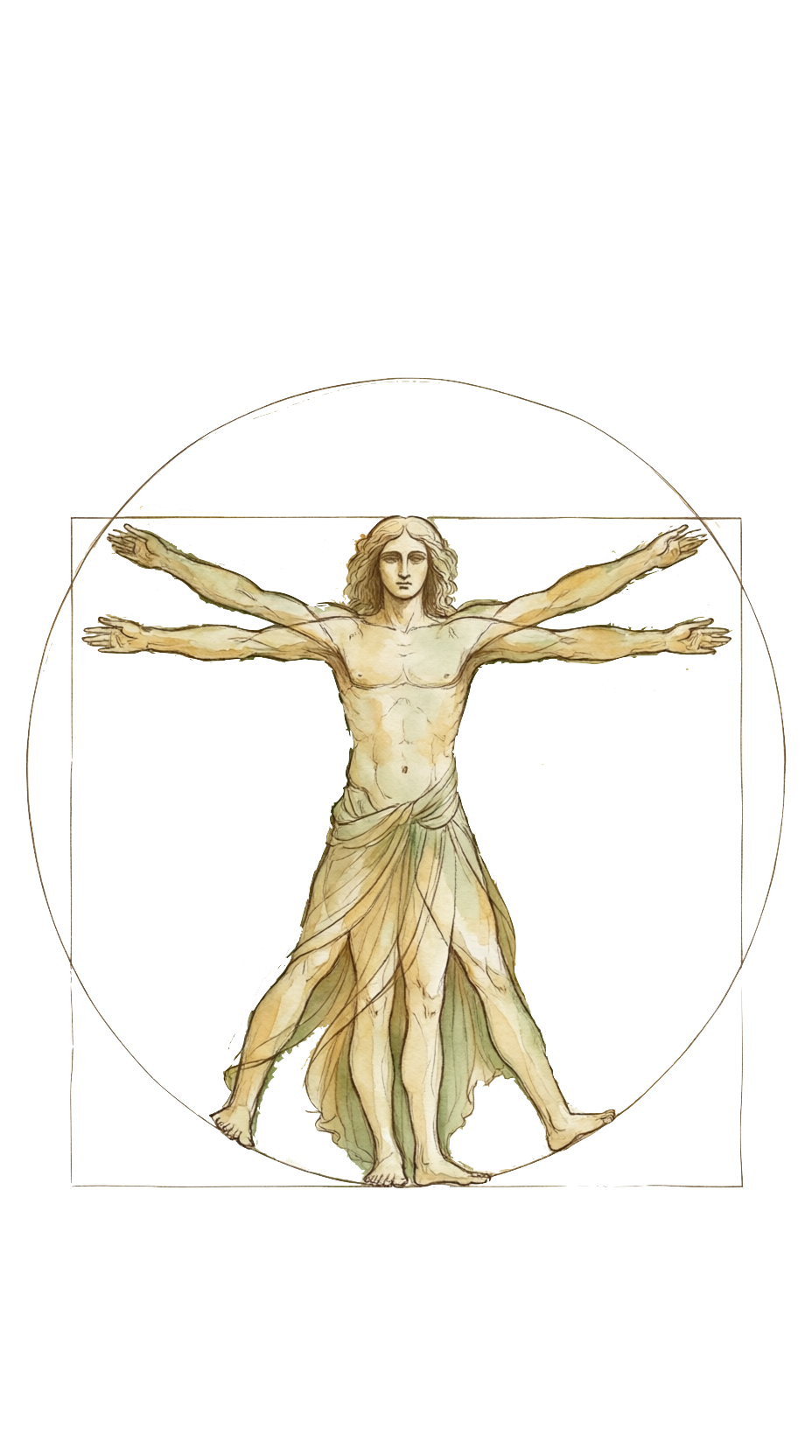
A 60-second check-in — four questions, no typing required. Pick from twenty illustrated feelings, mark where you carry them in the body, and name the state you want instead. U4EA maps your feedback to a seven-chakra score, then tunes a session to move it.
Every check-in and every session deepens your history — the trend line sharpens, the recommendations get closer, the streaks and Fuse Beads stack up. And the whole thing runs at your pace, on your terms.
Your U4EaScore is saved with every check-in — the profile sparkline shows where you're heading, not just where you are.
A ten-second mood pulse after each session feeds your history — the longer you practice, the more precisely your sessions meet you where you are.
Your check-ins and your history are yours. What you track, what you share, and what your profile shows — that's your call, always.
Host a room or drop into one. Playback stays in sync for every listener in real time, and hosts pick the sound — binaural beats, singing bowls, nature, color noise, or the generative engine.
And hosting works both ways: run a wind-down for friends across town, or guide a calming session for a parent or someone in your care — you hold the controls, they just listen.
Each solfeggio tone maps to one of the seven centers — a nudge from one state toward another. Sessions blend them with the brainwave band that fits your goal.
Release fear, guilt, and tension. Ground yourself in stability and security.
Unlock creative flow and meet change with adaptability.
The tone often called “the miracle” — associated with transformation and renewal.
Foster compassion, connection, and easier relationships.
Speak your truth with clarity and creative authenticity.
Sharpen intuition and insight, and settle a scattered mind.
Open into a sense of spaciousness and higher perspective.
Three quick questions — no typing. U4EA maps them to a session tuned to where you are and where you want to be.
Sound has been used to shift human consciousness for thousands of years. Here's what happened — and what's happening now. Open any card for the detail.
Aboriginal Australians used the didgeridoo — the world's oldest known wind instrument — in healing ceremonies. The drone it produces sits in the theta frequency range: the same range modern neuroscience associates with deep meditation.
Egyptian temples were built with acoustic chambers designed to enhance and reflect specific sound frequencies. The Great Pyramid of Giza included chambers used to facilitate restoration, and sacred vocal incantations were central to ceremonial practice. The priests weren’t decorating — they were engineering.
Nada Yoga — the yoga of sound — taught that the body has distinct resonant centers, and that sustained frequency exposure shifts the state of each one. The seven-center framework that underlies U4EA traces directly to this tradition.
Pythagoras — yes, the triangle guy — taught that music could harmonize body, mind, and soul through precise mathematical ratios. He used the lyre and flute in his sessions and called it the music of the spheres. What he was describing was frequency entrainment — we just didn’t have the word yet.
Tibetan monks refined the singing bowl to produce layered harmonic frequencies for meditation. Simultaneously, Sufi mystics used rhythmic chanting and music — sama — as a formal path to altered states. Two traditions, one mechanism.
Across Native American, Aboriginal, African, and Amazonian cultures, sound was — and still is — central to ceremony. Shamanic drumming at 4–7 Hz corresponded to theta brainwave states, centuries before EEG existed. In Hawaii, sacred oli chants restored mana. Nobody coordinated this — the body gave the same answer everywhere it was asked.
Neurologist Jean-Martin Charcot used giant tuning forks on resonating benches for locomotor ataxia, and built a vibrating chair after noticing Parkinson’s patients improved after bumpy train rides. Frequency-based therapy had a place in mainstream Western practice. Then it didn’t.
Funded by the Carnegie Foundation, the Flexner Report set out to eradicate complementary practice from American medical education. Within two decades, sound therapy, vibrational approaches, and nutritional ones were systematically removed from the curriculum. A hundred years of rediscovery followed.
Music therapy spread through the 1940s to rehabilitate soldiers returning from the Second World War — work that led to the founding of the American Music Therapy Association. The body remembered what the curriculum forgot.
Physicist Gerald Oster published research in Scientific American formally documenting the binaural beat — the brain’s measurable response to two slightly different frequencies, one in each ear. What monks had practiced for a thousand years now had a mechanism.
Padmanabhan (2005), Wahbeh (2007), and Jirakittayakorn & Wongsawat (2017) — independent teams confirm measurable effects of binaural beats on anxiety, relaxation, and cognitive state. The research U4EA is built on grows out of this body of work.
The NIH and National Endowment for the Arts formally convened around what they call music as medicine — committing over $35 million to research the therapeutic application of sound. After 113 years, the field is back inside the institution.
U4Ea sits at the intersection of this entire lineage — 40,000 years of practice, a century of neglect, and a research renaissance that's only beginning. Your check-in takes 60 seconds.
Presets, a personalized frequency engine, and fine controls — organized around what each does for you.
Across seven chakra-color categories, with free-tier access to one beat in every category.
AI-selected combinations matched to your current state and the goal you set for the session.
Tune the left and right ear separately, with a live binaural-beat readout as you go.
Tap where you carry it. The figure translates body regions into your seven-chakra score.
Sessions grouped by Today, Yesterday, This week, Older — replay any of them with one tap.
Save beat combinations, share them by deep link, and build a library that's yours.
iOS & Android background playback, silent-mode override, headphone-friendly by default.
The interface follows your system, or whichever mode you prefer.
Localized for English, Spanish, and French today — Simplified Chinese on the way.
My stress melted in minutes.
I finally sleep through the night.
I play it before meetings — I feel sharper, calmer, more me.
It’s like a reset made of color and sound.
Feeling like yourself should be as effortless as listening.
U4EA began as a personal tool — a way to find balance in a world that never stops demanding more. I wanted something simple, that worked with my body's natural rhythms instead of against them.
It's the next step in that idea: making these personalized soundscapes available to everyone, everywhere. Whether you're carrying stress, chasing better sleep, or simply want to feel more like yourself, U4EA meets you where you are.
My hope is that it helps you find your inner rhythm again — that natural state of flow, clarity, and calm that's always been yours.
— Brandon Howard · Your journey, your pace.
The same practice, built for organizations — hospitals, care homes, HR teams, spas, and schools. Deployed in a day, no hardware, with a free six-week pilot.

A simplified experience residents open with a printed code — no account, no app-store hunt, no friction.

Practitioners start, guide, and monitor sessions remotely — one dashboard for every room and device.

Aggregate emotional-balance trends and adoption rates. No individual data, no privacy compromise.
$8.99/month for the full library, ad-free listening, unlimited sessions, and premium Spaces.
See pricing